$ git log --all --oneline

Projects

Each project is documented through its problem statement, technical solution, and measurable outcome. Use the category filters below to explore work across DevOps, Cybersecurity, and Full-Stack Engineering.

~/case-studies/ganda-care.md

shipped
Full-Stack Software

GandaCare — Offline Dermatology AI Triage

Aug 2026

Offline-first, explainable dermatology triage platform awarded 2nd Place at Cimas Healthathon 3.0, engineered for low-connectivity clinics with dark-skin fairness calibration.

// problem statement
Dermatologists are severely scarce in Sub-Saharan Africa, creating months-long referral backlogs. Mainstream medical computer vision models underrepresent darker skin phototypes (Fitzpatrick V & VI) and fail in rural clinics without continuous internet connectivity.
// engineering solution
Engineered a multi-tier clinical triage architecture: an offline Flutter mobile application running on-device edge AI triage and evaluating clinical safety gates (pediatric age, immunosuppression, fever, facial involvement), escalating high-risk cases to a React + Vite Specialist Portal with EDLIZ-aligned clinician treatment recommendations.
// key outcome & impact
Won 2nd Place (Runner-Up) at Cimas Healthathon 3.0. Validated zero-cloud dependency for rural clinic intake, sub-second on-device inference, and safety-gated specialist escalation.

System Architecture & Data Flow

Frontline Clinic (Offline Mobile)          Specialist Telehealth Layer (Edge / Web)
┌─────────────────────────────────────┐    ┌────────────────────────────────────────┐
│ Flutter Mobile App                  │    │ Specialist Portal (React + Vite)       │
│ ├─ Camera Lesion Capture            │───►│ ├─ Remote Triage & Review Queue        │
│ ├─ On-Device Edge AI Model          │    │ ├─ Clinical Safety Gate Inspection     │
│ └─ Clinical Safety Check (EDLIZ)    │    │ └─ EDLIZ Treatment Protocol Selection  │
└──────────────────┬──────────────────┘    └───────────────────▲────────────────────┘
                   │ (Background sync when online)             │
                   └──────────────► Spring Boot API ───────────┘
                                   (PostgreSQL + Docker)

Key Technical Highlights:

  • Awarded 2nd Place (Runner-Up) nationwide at the prestigious Cimas Healthathon 3.0.
  • 100% offline-capable on-device mobile vision model enabling diagnostic triage in off-grid clinics.
  • Strict clinical safety gates preventing algorithmic overconfidence on high-risk lesions (e.g., facial spread, fever).
  • Full alignment with the Essential Drugs List of Zimbabwe (EDLIZ) for specialist review workflows.
  • Flutter
  • Dart
  • React
  • Vite
  • Python
  • PyTorch
  • Spring Boot
  • PostgreSQL
  • Docker

~/case-studies/elicflow.md

active
Full-Stack Software

ElicFlow — Offline-First Cross-Platform POS & Inventory

Aug 2026 – Present

A cross-platform Point-of-Sale (POS) and inventory management ecosystem built in Flutter and Dart, featuring multi-format thermal receipt printing, barcode scanning, and resilient offline-first cloud sync.

// problem statement
Small-to-medium retail and hospitality businesses in regions with erratic power grids and unreliable connectivity struggle with cloud-reliant POS tools that fail during outages, causing stalled checkouts, untracked inventory drift, and end-of-day cash balance discrepancies.
// engineering solution
Architected a native, cross-platform POS application using Flutter and Dart that runs seamlessly across Android, iOS, Windows, macOS, Linux, and Web. Implemented local SQLite caching for instant transaction execution, barcode/QR product lookups, ESC/POS thermal receipt printing (80mm/A4), cash drawer session reconciliation, and asynchronous background synchronization via Firebase Firestore.
// key outcome & impact
Ensured uninterrupted commercial sales processing through complete offline resiliency, enabling instant cart checkouts, real-time profit margin calculations, and transparent cash variance tracking across shifts.

System Architecture & Data Flow

Cross-Platform UI (Android / iOS / Desktop / Web - Flutter)
  │
  ├──► Local High-Speed State & Storage (SQLite / Offline Cache)
  │      ├─ Sub-millisecond Cart & Barcode Item Lookup
  │      ├─ Parked Sales & Shift Cash Reconciliation
  │      └─ Thermal ESC/POS Receipt Rendering (80mm / A4)
  │
  └──► Background Cloud Synchronization (When Network Available)
         └─ Firebase Firestore & Cloud Functions ──► Multi-Terminal Inventory Sync

Key Technical Highlights:

  • Single unified codebase running natively across Android, iOS, Windows, macOS, Linux, and Web via Flutter.
  • 100% offline transaction processing with local persistence and automated background cloud reconciliation.
  • Hardware peripheral integration with 80mm thermal ESC/POS printers and handheld barcode scanners.
  • Comprehensive financial controls: cash drawer variance tracking, debtors/creditors ledger, and profit margin analysis.
  • Flutter
  • Dart
  • Firebase Firestore
  • Cloud Functions
  • SQLite
  • Cross-Platform
  • Thermal ESC/POS

~/case-studies/homelab.md

active
DevOps & Infrastructure

Homelab Infrastructure & Self-Hosting

Jun 2026 – Present

A production-grade self-hosted infrastructure cluster hosting 15+ containerized services, split-horizon DNS, and automated backups on Proxmox VE.

// problem statement
Public cloud environments abstract away underlying hypervisors, storage, and networking layers. I needed bare-metal control to master enterprise virtualization, container orchestration, and failover mechanics.
// engineering solution
Engineered a multi-node Proxmox VE cluster hosting Nextcloud, Gitea, Paperless-ngx, and Vaultwarden via Docker Compose. Implemented PostgreSQL and Redis data backends, split-horizon DNS routing, and Authentik for centralized SSO/OIDC identity management.
// key outcome & impact
Maintains 15+ containerized daily productivity services with automated ZFS snapshot backups, split-horizon DNS routing, and centralized Authentik SSO authentication, eliminating reliance on third-party cloud tools.

System Architecture & Data Flow

                Public Internet / Local Network
                               │
                     Cloudflare DNS / Proxy
                               │
               Traefik Reverse Proxy (*.elic01.dev)
                               │
               ┌───────────────┴───────────────┐
               ▼                               ▼
        Authentik SSO (IdP)          Containerized Services
      (OAuth2 / OIDC / LDAP)       (Nextcloud, Gitea, Immich)
               │                               │
               └───────────────┬───────────────┘
                               ▼
                      Proxmox VE Cluster
                    (5x EliteDesk Nodes)
                               │
               ┌───────────────┴───────────────┐
               ▼                               ▼
       PostgreSQL / Redis              ZFS / PBS Backups

Key Technical Highlights:

  • 5-Node Bare-metal Proxmox VE cluster running on AMD Ryzen hardware.
  • Split-horizon DNS architecture resolving *.elic01.dev with wildcard Let’s Encrypt certificates.
  • Centralized Authentik identity provider protecting Nextcloud, Paperless-ngx, and Gitea.
  • Automated Proxmox Backup Server (PBS) scheduled snapshots and deduplicated storage retention.
  • Proxmox VE
  • Docker
  • Docker Compose
  • PostgreSQL
  • Redis
  • Authentik
  • Linux
  • ZFS

~/case-studies/help-desk-vault.md

shipped
Cybersecurity Tooling

Cimas Vault — Zero-Knowledge Secret Sharing

Jan 2026 – Aug 2026

An enterprise Zero-Knowledge ephemeral secret-sharing platform designed to eliminate plaintext password and token leakage across help desk operations.

// problem statement
IT technicians and corporate staff frequently share sensitive credentials, database keys, and temporary passwords over unencrypted email, Teams, or WhatsApp messages, creating permanent exposure vectors.
// engineering solution
Architected a zero-knowledge web application using client-side Web Crypto AES-GCM 256-bit encryption. The decryption key is generated in the sender’s browser and stored exclusively in the URL hash fragment (#), ensuring the server never receives the key or plaintext. Built on Upstash Redis with burn-on-view auto-deletion and sliding-window rate limiting.
// key outcome & impact
Guaranteed cryptographic privacy for enterprise IT support operations where even database administrators and hosting servers cannot read transmitted credentials.

System Architecture & Data Flow

Sender Browser (Client-Side Encryption)
  │  1. Generates 256-bit AES-GCM key & IV locally
  │  2. Encrypts secret text ──► Ciphertext payload
  │  3. Assembles link: /view/[id]#[localKey]  (Hash fragment never hits server)
  │
  ├──► POST /api/secret ──► Upstash Redis (Key-Value TTL Store)
  │                          └─ Stores ONLY Ciphertext + Configured Max-Views / TTL
  │
Recipient Browser
  │  1. Retrieves Ciphertext from /view/[id]
  │  2. Extracts #[localKey] from window.location.hash
  │  3. Decrypts secret in-memory ──► Redis atomically burns the key

Key Technical Highlights:

  • True Zero-Knowledge architecture: decryption key is isolated in URL hash fragment and never transmitted over HTTP.
  • AES-GCM 256-bit authenticated client-side encryption with distinct per-secret initialization vectors.
  • Burn-on-view auto-destruction and configurable TTLs (5 min to 7 days) via Redis.
  • Designed and evaluated for enterprise healthcare IT operations during Cimas Health Group tenure.
  • TypeScript
  • Next.js
  • Web Crypto API
  • AES-GCM-256
  • Upstash Redis
  • Tailwind CSS
  • Radix UI

~/case-studies/aurahealth.md

active
Full-Stack Software

AuraHealth — Clinical & Patient Telehealth Platform

Aug 2026 – Present

A modern healthcare platform featuring multi-LLM symptom triage, OpenFDA drug-drug interaction validation, and tokenized emergency QR profile access.

// problem statement
Fragmented medical histories, missed medication adherence, and slow clinical intake lead to diagnostic bottlenecks and preventable adverse drug-drug contraindications.
// engineering solution
Architected a full-stack Next.js 16 (App Router) platform with strict TypeScript. Integrated dual LLM triage (Claude Haiku & GPT-4o mini with Ollama fallback), OpenFDA REST API interaction verification, vital telemetry tracking, emergency QR tokens, and doctor tele-consultations backed by Supabase PostgreSQL RLS.
// key outcome & impact
Engineered sub-second AI triage responses, automated drug contraindication detection, and secure emergency medical profile lookups optimized for low-bandwidth environments.

System Architecture & Data Flow

Patient / Doctor Client (Next.js 16 App Router)
  │
  ├──► Supabase Auth & PostgreSQL (Row-Level Security)
  │      └─ Patients, Medical Records, Prescriptions, Vitals
  │
  ├──► Multi-LLM Triage Engine (Claude Haiku / GPT-4o mini / Ollama)
  │      └─ Urgency Classification & Symptom Severity Scoring
  │
  ├──► OpenFDA Drug Validation Service
  │      └─ Automated Cross-Check for Adverse Drug-Drug Interactions
  │
  └──► Emergency QR Access System
         └─ Tokenized Public URL ──► Decrypts Ephemeral Critical Snapshot

Key Technical Highlights:

  • Multi-model AI triage engine using Claude Haiku and GPT-4o mini with local Ollama offline fallback.
  • Automated drug-drug contraindication cross-referencing via OpenFDA REST API.
  • Emergency QR card architecture providing instant first-responder access to critical health data.
  • Strict Row-Level Security (RLS) data policies isolating patient, doctor, and administrative tenants.
  • Next.js 16
  • TypeScript
  • Tailwind CSS
  • Supabase
  • PostgreSQL
  • Claude API
  • OpenAI API
  • Zustand
  • TanStack Query

~/case-studies/uniconnect.md

shipped
Full-Stack Software

UniConnect (DSRMS) — Student Review & Resolution Platform

Aug 2024 – May 2025

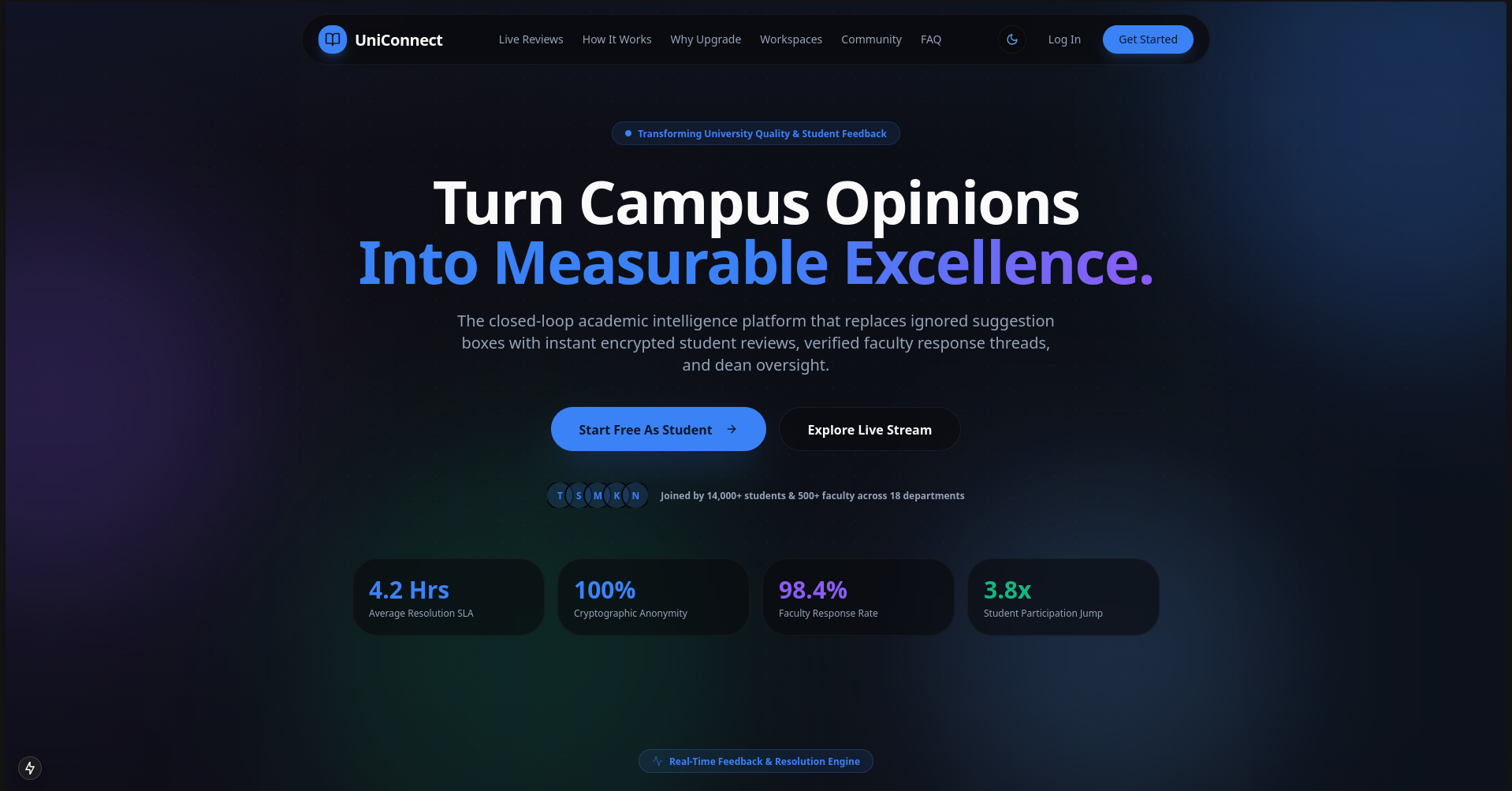
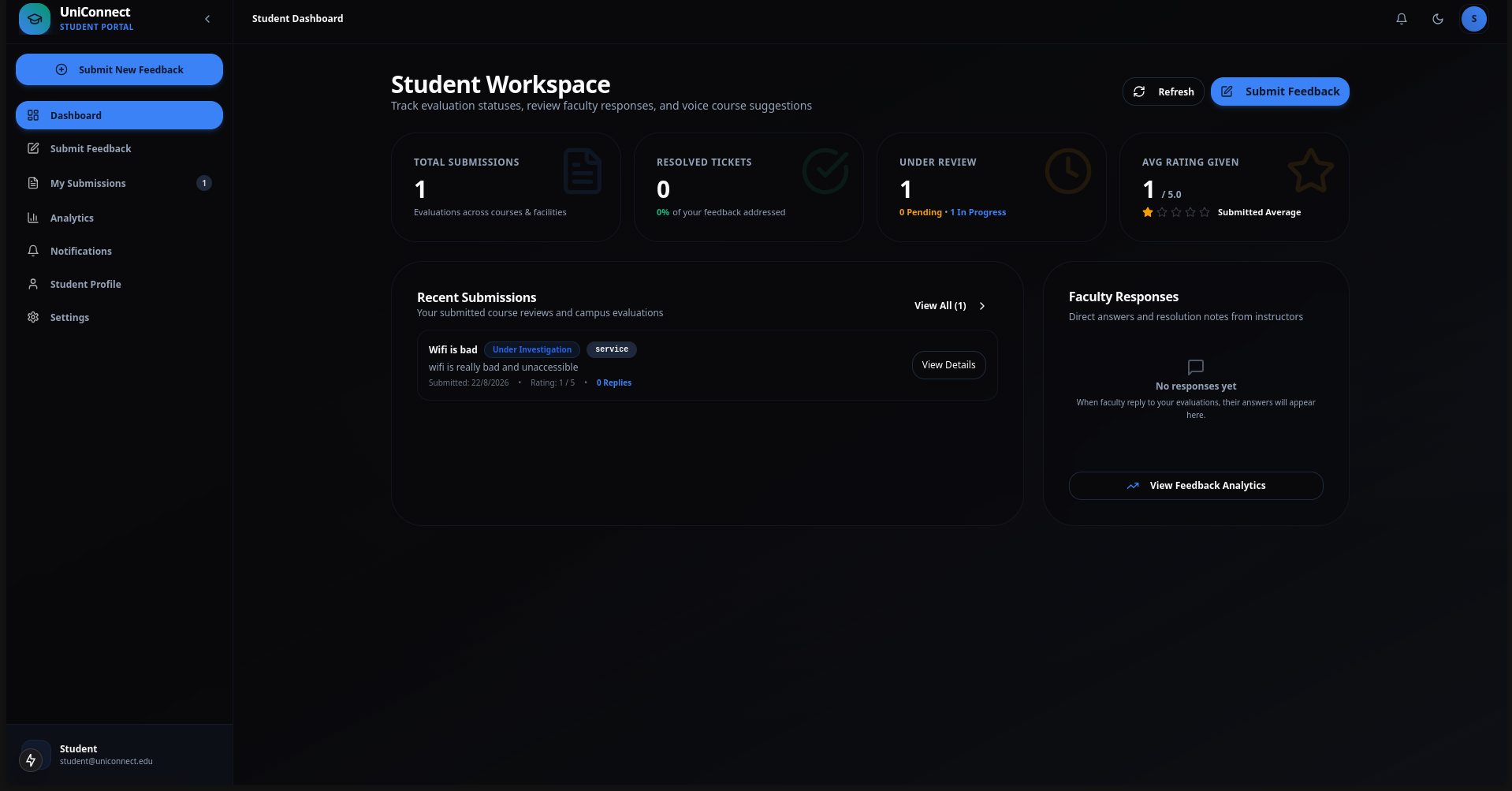
A closed-loop academic intelligence platform built for Harare Institute of Technology featuring zero-reprisal student evaluations, verified faculty response threads, and executive QA analytics.

UniConnect Platform Landing Page & Navigation
Student Dashboard & Feedback Submission Portal
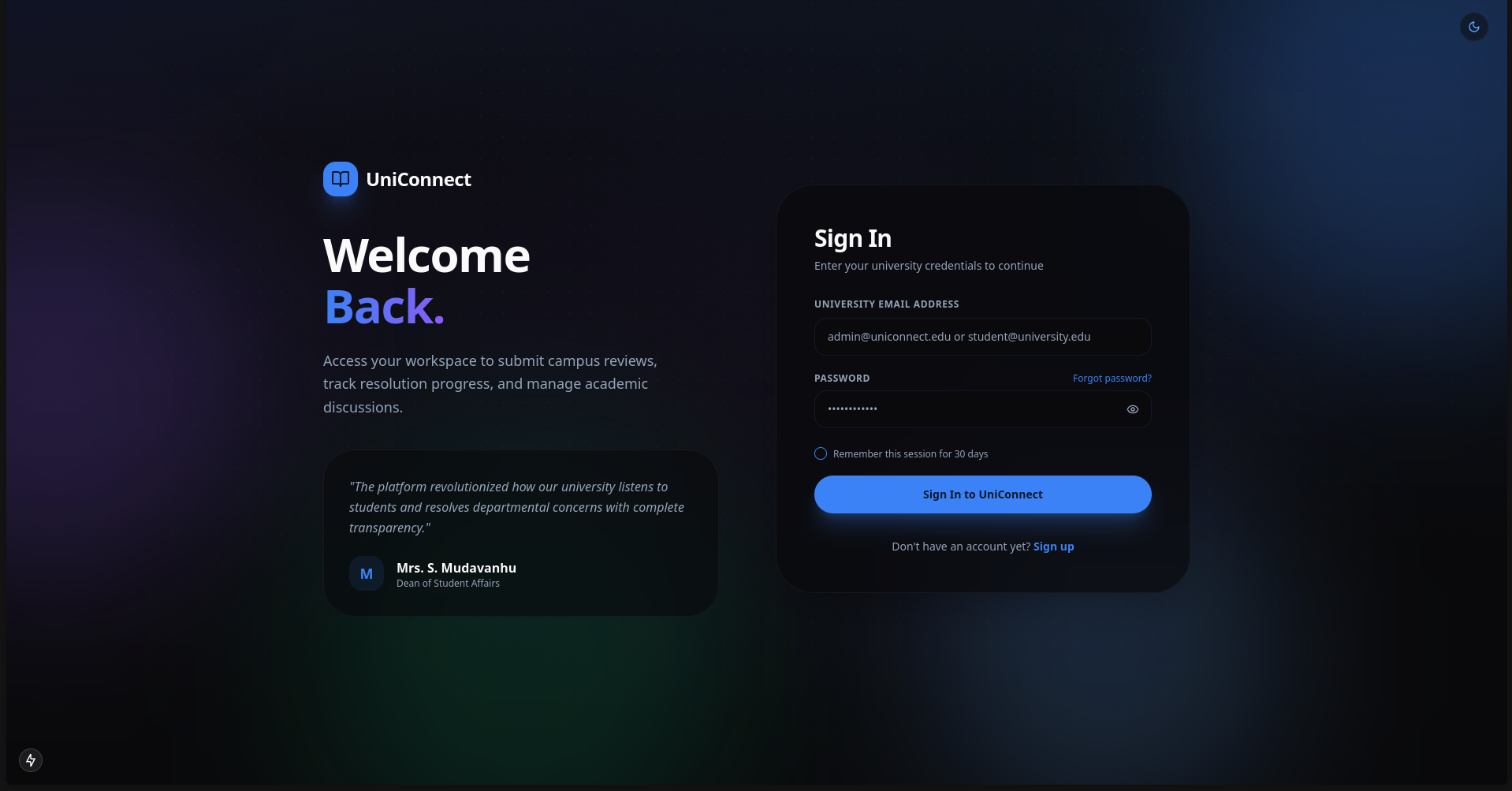
Role-Based Authentication & Institutional Login
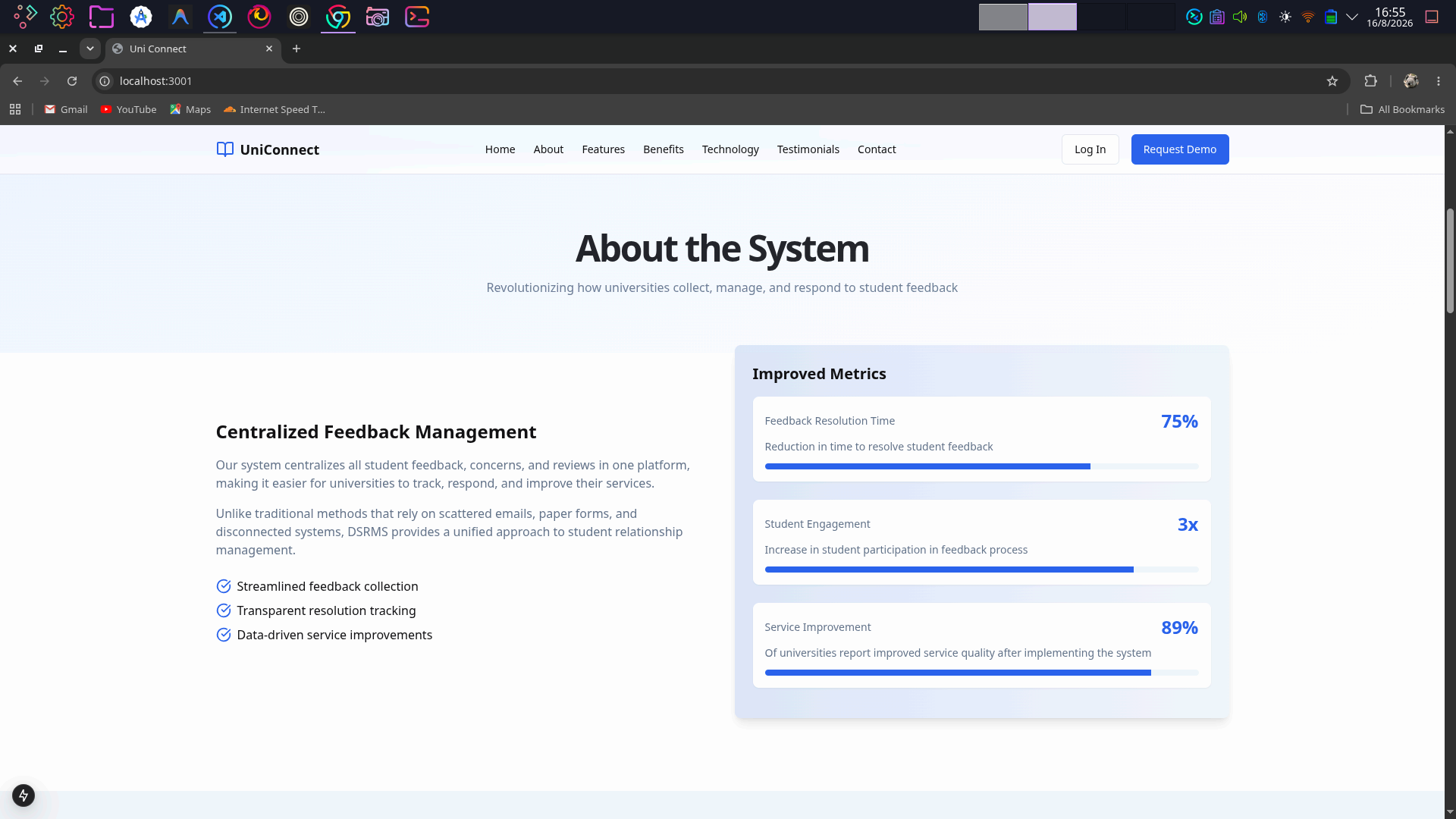
System Architecture & Platform Overview
// problem statement
Student feedback at HIT flowed through slow, paper-based channels with no visibility, tracking, or accountability, preventing formative improvements before semester finals.
// engineering solution
Engineered a Next.js 15 and TypeScript platform with Firebase Auth for role-based access, Firestore for real-time ticket escalation, and a responsive Tailwind CSS interface with executive quality assurance triage dashboards.
// key outcome & impact
Built and deployed an end-to-end feedback platform connecting students with departmental academic staff, replacing paper-based complaints with real-time status tracking and verified resolution audits.

System Architecture & Data Flow

Next.js Frontend ──► Firebase Auth (RBAC) ──► Firestore Realtime DB ──► Staff Triage Dashboard
(Student Portal)      (Institutional Login)    (Live Ticket Updates)       (Resolution Workflow)

Key Technical Highlights:

  • Led group engineering and Git collaboration for HIT campus platform.
  • Closed-loop academic feedback architecture replacing end-of-semester paper forms.
  • Real-time status updates, department-level issue routing, and faculty resolution tracking.
  • Responsive interface optimized for mobile and desktop campus devices.
  • Next.js 15
  • TypeScript
  • React 19
  • Firebase
  • Firestore
  • Tailwind CSS
  • Git

~/case-studies/elic-pdf-tool.md

shipped
Cybersecurity Tooling

Elic PDF Tool — Privacy-First Client-Side Document Suite

Aug 2026

A browser-based document processing suite with Cinema Mode editing, executing all PDF conversions, metadata sanitization, and restructuring 100% client-side via WebAssembly and PDF.js.

// problem statement
Commercial online PDF tools require uploading confidential contracts, medical records, and financial statements to third-party cloud servers, posing severe data leakage and privacy risks.
// engineering solution
Engineered a zero-upload, client-side PDF manipulation application in Next.js and TypeScript. Leverages WebAssembly and pdf-lib to perform document merging, page extraction, stream compression, damaged xref table repair, and metadata sanitization directly within the browser’s memory sandbox without server uploads.
// key outcome & impact
Delivers complete document editing and privacy sanitization without server transmission, ensuring confidential records remain strictly on the user’s local device.

System Architecture & Data Flow

Browser Client Sandbox (Zero Server Upload)
  │
  ├──► PDF.js & WebAssembly Engine
  │      ├─ Memory-isolated document parsing & rendering
  │      └─ Cinema Mode full-screen reading & annotation
  │
  ├──► In-Memory Manipulation Pipeline (pdf-lib)
  │      ├─ Merge, Split, Reorder, Rotate, Crop (N-Up)
  │      └─ Stream compression & damaged xref table repair
  │
  └──► Security & Privacy Layer
         ├─ Metadata Sanitization (strips author, OS, GPS tags)
         └─ Client-side password encryption & permissions lock

Key Technical Highlights:

  • Zero server uploads: 100% of processing, parsing, and rendering occurs inside client browser memory.
  • Automated metadata stripping removing author identity, software signatures, and device metadata.
  • Cinema Mode full-screen distraction-free PDF viewer with zoom, thumbnails, and page rearrangement.
  • Client-side PDF repair, stream compression, and form flattening via WebAssembly.
  • TypeScript
  • Next.js
  • WebAssembly
  • PDF.js
  • pdf-lib
  • Tailwind CSS
  • Data Privacy

~/case-studies/cisco-meraki-ansible.md

shipped
DevOps & Infrastructure

Cisco Meraki Ansible Automation

Aug 2026

Infrastructure-as-Code (IaC) playbooks that automate multi-site VLAN provisioning, firewall policy rollout, and configuration compliance checks across Cisco Meraki hardware.

// problem statement
Configuring enterprise network appliances manually via GUI dashboards introduces human error, configuration drift across branch sites, and slow rollback times during network incidents.
// engineering solution
Engineered modular Ansible playbooks that interface directly with the Cisco Meraki REST API to push declarative firewall rules, manage SSID profiles, and enforce VLAN policies from Git repositories.
// key outcome & impact
Automated multi-site network configuration via declarative playbooks, reducing manual dashboard provisioning steps to a single executable script with complete Git-based change tracking.

System Architecture & Data Flow

Git Repository (IaC) ──► Ansible Engine ──► Meraki REST API ──► Enterprise Edge Hardware
 (declarative YAML)        (playbook tasks)   (HTTPS / Token)       (VLANs, SSIDs, Firewall)

Key Technical Highlights:

  • Declarative Infrastructure-as-Code eliminates manual configuration drift across branch sites.
  • Automated VLAN allocation, guest isolation, and egress filtering rules.
  • Full Git revision history enabling instant rollback during network configuration incidents.
  • Python
  • Ansible
  • Cisco Meraki API
  • YAML
  • DevOps
  • Network Automation

~/case-studies/agrimaster.md

active
Full-Stack Software

AgriMaster v2.0 — Precision Agronomy ERP & Diagnostics

2026 – Present

Precision agriculture ERP and commerce platform featuring visual AI crop disease diagnostics, microclimate agrometeorology, and offline-first field scouting.

// problem statement
Commercial and cooperative farming enterprises across Southern Africa suffer massive yield losses from delayed pest detection, erratic microclimates, and manual record systems that cannot operate in disconnected rural fields.
// engineering solution
Engineered an enterprise precision agronomy platform with Next.js 15, React 19, and Supabase. Features on-device computer vision for leaf pest & disease identification, hyper-local weather telemetry, crop & livestock financial ledger modeling, and an offline-first PWA architecture for field scouts.
// key outcome & impact
Unified field scouting, agrometeorological spray forecasting, and financial yield tracking into a deploy-ready ERP calibrated for Zimbabwean agro-ecological zones (e.g. Mazowe).

System Architecture & Data Flow

Field Scout / Farm Manager (Offline-Ready PWA)
  │
  ├──► Visual AI Diagnostics (Computer Vision / Pest & Disease Models)
  │      └─ Fast on-device/edge image classification of leaf pathologies
  │
  ├──► Agrometeorology Engine
  │      └─ Microclimate forecasting, evapotranspiration & spray windows
  │
  └──► Enterprise Farm ERP Ledger (Supabase / PostgreSQL)
         ├─ Field blocks, soil test records, crop cycles
         └─ Input procurement, yield projection & livestock financial modeling

Key Technical Highlights:

  • Computer vision diagnostics identifying common African crop diseases and pest infestations.
  • Hyper-local agrometeorological forecasting calculating optimal chemical spraying and irrigation windows.
  • Enterprise crop & livestock financial ledger tracking input costs against projected seasonal yields.
  • Progressive Web App (PWA) architecture supporting offline field scouting and background sync.
  • Next.js 15
  • React 19
  • TypeScript
  • Supabase
  • Tailwind CSS
  • PWA
  • Computer Vision

~/case-studies/open-channel.md

shipped
Cybersecurity Tooling

OpenChannel — Anonymous Whistleblower & Pulse Platform

Dec 2025 – Present

Multi-tenant whistleblower intelligence and employee feedback platform with zero-knowledge submission anonymity, USSD gateway support, and AI sentiment analysis.

// problem statement
Workplace harassment, fraud, and safety violations go unreported due to employee fear of retaliation, while non-desk and frontline staff in low-connectivity areas lack web portals to speak up.
// engineering solution
Architected a multi-tenant feedback platform using Next.js and Supabase RLS. Strips identifying IP headers and client footprints at the gateway. Built a custom USSD session manager and menu builder enabling frontline staff on basic feature phones to submit anonymous feedback and participate in pulse polls without mobile internet.
// key outcome & impact
Created a secure, untraceable reporting channel with automated NLP sentiment prioritization and dual web + USSD accessibility across corporate and industrial teams.

System Architecture & Data Flow

Reporting Channels:
 Web App (Stripped IP / Headers)         Feature Phone (No Internet)
         │                                       │
         ▼                                       ▼
 Next.js Edge Router                     USSD Session Gateway
         │                                       │
         └───────────────┬───────────────────────┘
                         ▼
             Anonymization Pipeline
         (Strips IP, UserAgent, Metadata)
                         │
        ┌────────────────┴────────────────┐
        ▼                                 ▼
 Supabase Multi-Tenant DB       NLP Sentiment Classifier
 (Isolated Org RLS)             (Toxicity & Priority Triage)

Key Technical Highlights:

  • True anonymous submission pipeline completely decoupling respondent identities and network telemetry.
  • Dual-channel ingestion: responsive web portal alongside USSD gateway for offline frontline workers.
  • Automated NLP sentiment and urgency classification prioritizing critical safety or fraud disclosures.
  • Multi-tenant isolation using Supabase Row-Level Security ensuring organizational data segregation.
  • Next.js
  • TypeScript
  • Supabase
  • PostgreSQL
  • USSD Gateway
  • NLP Sentiment Analysis
  • Tailwind CSS

~/case-studies/vulnerability-assessment-toolkit.md

shipped
Cybersecurity Tooling

Vulnerability Assessment Toolkit

Aug 2026

An automated security auditing shell suite designed for rapid reconnaissance, port scanning analysis, and system attack surface evaluation.

// problem statement
System administrators need fast, repeatable security checks to identify exposed ports, weak permissions, and outdated network services without relying on heavy proprietary scanners.
// engineering solution
Developed a modular Bash and Python auditing suite integrating Nmap scripting engine (NSE), firewall rule audits, and permission scanners with structured markdown and JSON log output.
// key outcome & impact
Automated repetitive port scanning, service versioning, and attack surface enumeration, replacing manual CLI triage with structured JSON and Markdown audit reports.

System Architecture & Data Flow

Target Network / IP ──► Host & Port Recon ──► NSE Vulnerability Audits ──► Structured Report
 (CIDR Input Range)        (Nmap Engine)          (CVE & Service Probes)       (Markdown & JSON)

Key Technical Highlights:

  • Automates multi-phase network reconnaissance and service fingerprinting.
  • Integrates Nmap Scripting Engine (NSE) for common vulnerability and misconfiguration detection.
  • Generates machine-parsable JSON output and clean Markdown audit summaries.
  • Shell
  • Linux
  • Nmap
  • Security Auditing
  • Bash
  • Python

~/case-studies/lady-onyx.md

active
Full-Stack Software

Lady Onyx — Chauffeur Logistics & Mobility Ecosystem

Aug 2026

Comprehensive transport platform spanning a Next.js 16 web administration console, parent portal, and dual Flutter mobile applications for client bookings and driver dispatch.

Lady Onyx Transport Web Administration Portal
// problem statement
School-run transport and executive chauffeuring in Zimbabwe suffer from lack of real-time route visibility, paper-based attendance rosters, and disjointed driver communication.
// engineering solution
Architected a synchronized multi-platform mobility ecosystem: a Next.js 16 web portal with live GPS vehicle tracking and QR-code student boarding verification, paired with dedicated Flutter client and driver applications on Firebase Firestore and Cloud Functions.
// key outcome & impact
Connected dispatchers, drivers, and parents on a single real-time platform with automated GPS route telemetry and verified child pickup/dropoff notifications.

System Architecture & Data Flow

Parents & Corporate Clients                Chauffeur Drivers
(Flutter Client App)                       (Flutter Logistics App)
        │                                          │
        ├──► Real-time GPS Location & Status ◄─────┤
        │                                          │
        └───────────────────┬──────────────────────┘
                            ▼
           Firebase Firestore & Cloud Functions
           (Trip dispatch, Geofences, QR verification)
                            │
                            ▼
        Dispatcher / Executive Web Console (Next.js 16)
        (Fleet management, School run rosters, Billing)

Key Technical Highlights:

  • Dual Flutter mobile apps (client and driver) synchronized in real time with Next.js web dispatch console.
  • School run safety protocols with digital student profiles and QR code boarding confirmation.
  • Live GPS telematics and trip monitoring utilizing Firebase Firestore real-time snapshot streams.
  • Zimbabwe localized authentication (+263 phone OTP) and multi-parent dependent management.
  • Next.js 16
  • TypeScript
  • Flutter
  • Dart
  • Firebase Firestore
  • Firebase Auth
  • Cloud Functions
  • Tailwind CSS

~/case-studies/healthcare-portal.md

shipped
Full-Stack Software

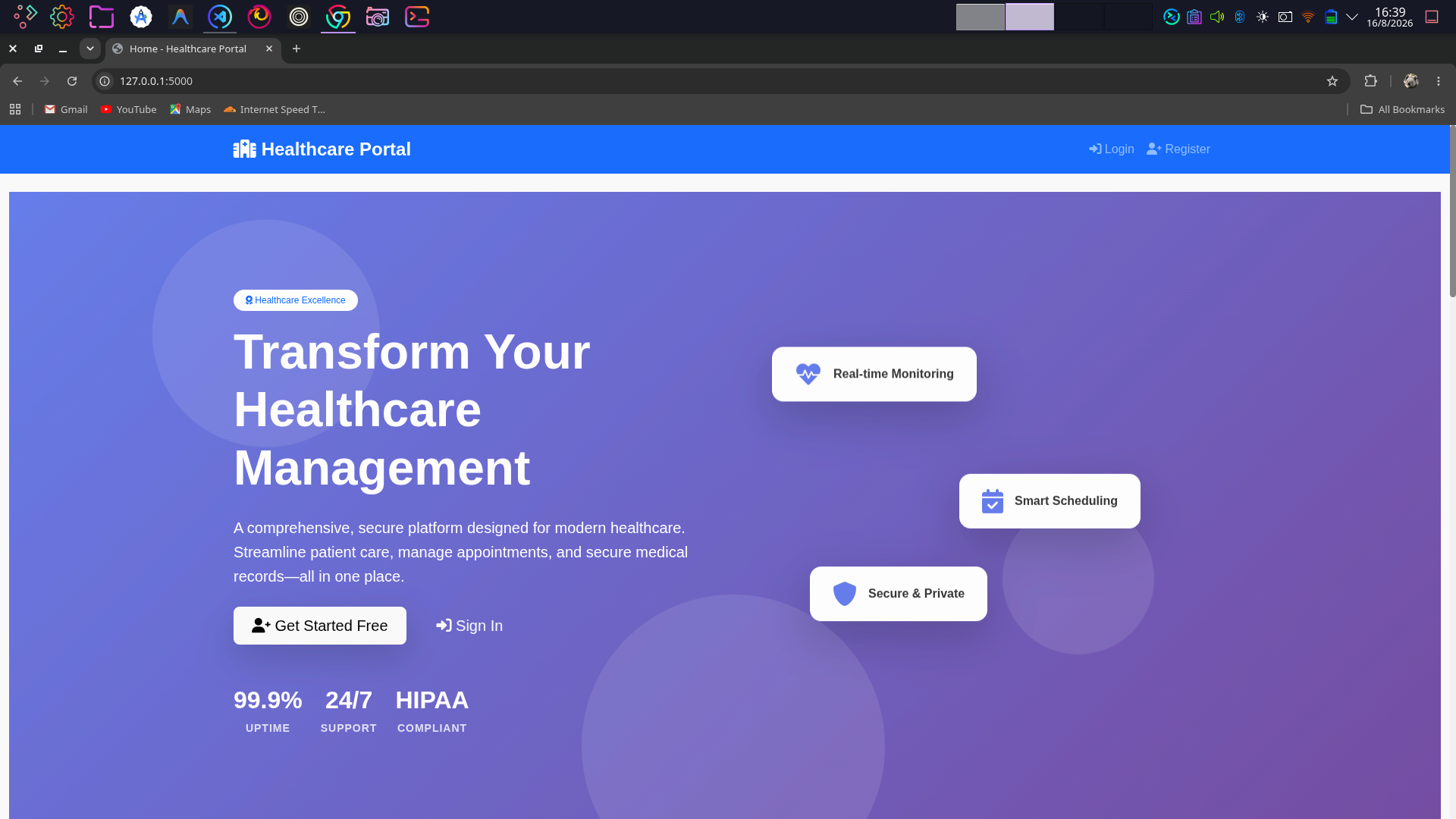
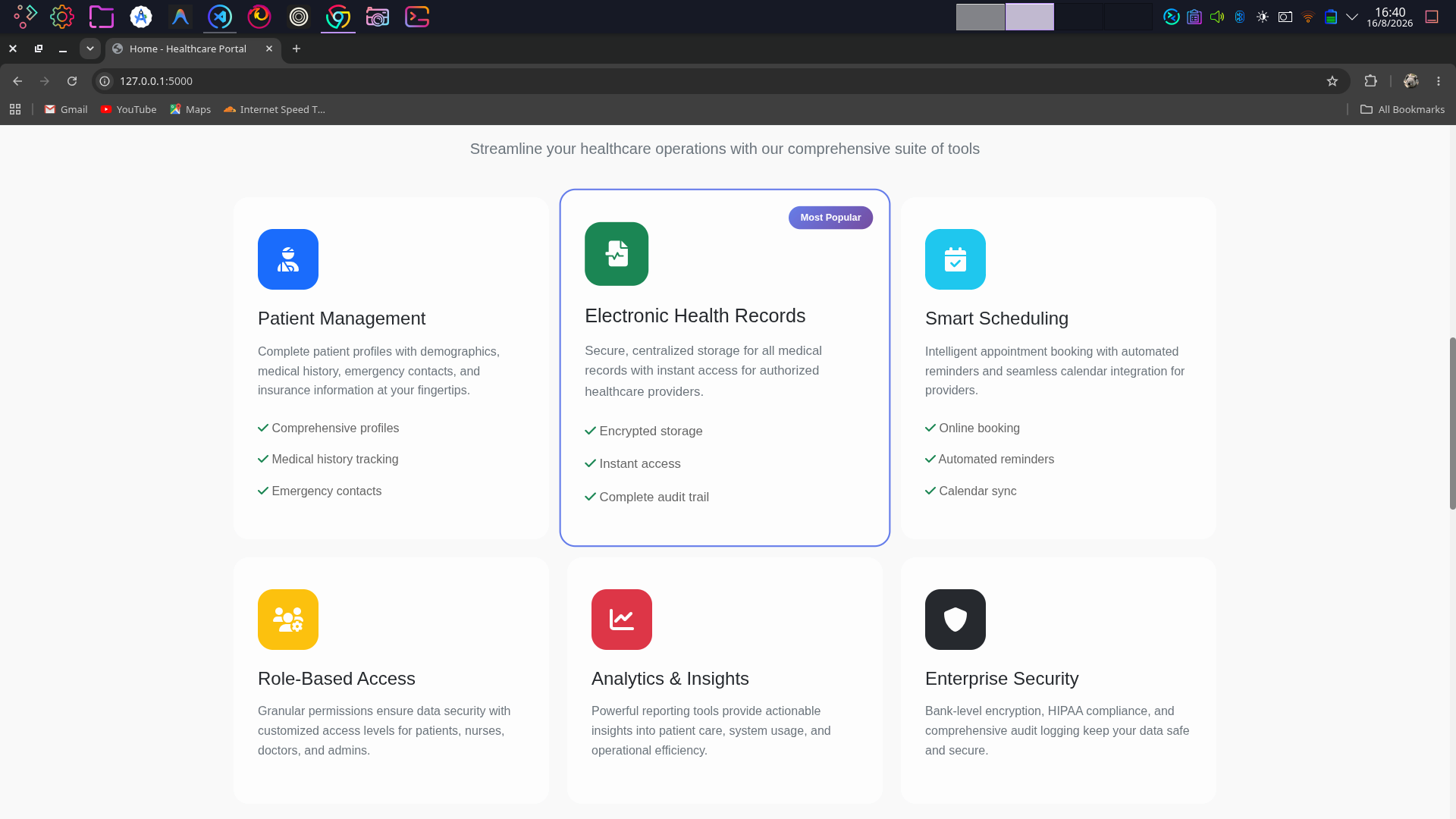
Healthcare Management Portal

Feb 2026

A comprehensive web portal designed for clinical workflow management, patient records, and appointment tracking in high-compliance healthcare environments.

Clinical Dashboard & Patient Management Overview
Feature Breakdown & Appointment Scheduling System
// problem statement
Healthcare facilities require structured digital interfaces to handle patient intake, clinician scheduling, and sensitive medical records safely and efficiently.
// engineering solution
Built a responsive TypeScript web application featuring role-separated portals for doctors, receptionists, and patients, complete with appointment workflows, prescription logs, and role-based access control.
// key outcome & impact
Implemented role-separated clinical workflows with strict role-based access control (RBAC), structured appointment scheduling, and audit-ready patient records.

System Architecture & Data Flow

Next.js Web App ──► RBAC Auth Middleware ──► Clinical Controllers ──► Encrypted Health DB
(Doctor/Patient UI)  (Session Verification)  (Intake, Prescriptions) (Audit Trail Logs)

Key Technical Highlights:

  • Role-separated interfaces for doctors, receptionists, and patients.
  • Digital patient intake, scheduling workflows, and prescription tracking.
  • Designed with strict data boundaries mirroring enterprise health compliance standards.
  • TypeScript
  • Next.js
  • React
  • Tailwind CSS
  • Healthcare IT

~/case-studies/fleettrack.md

active
Full-Stack Software

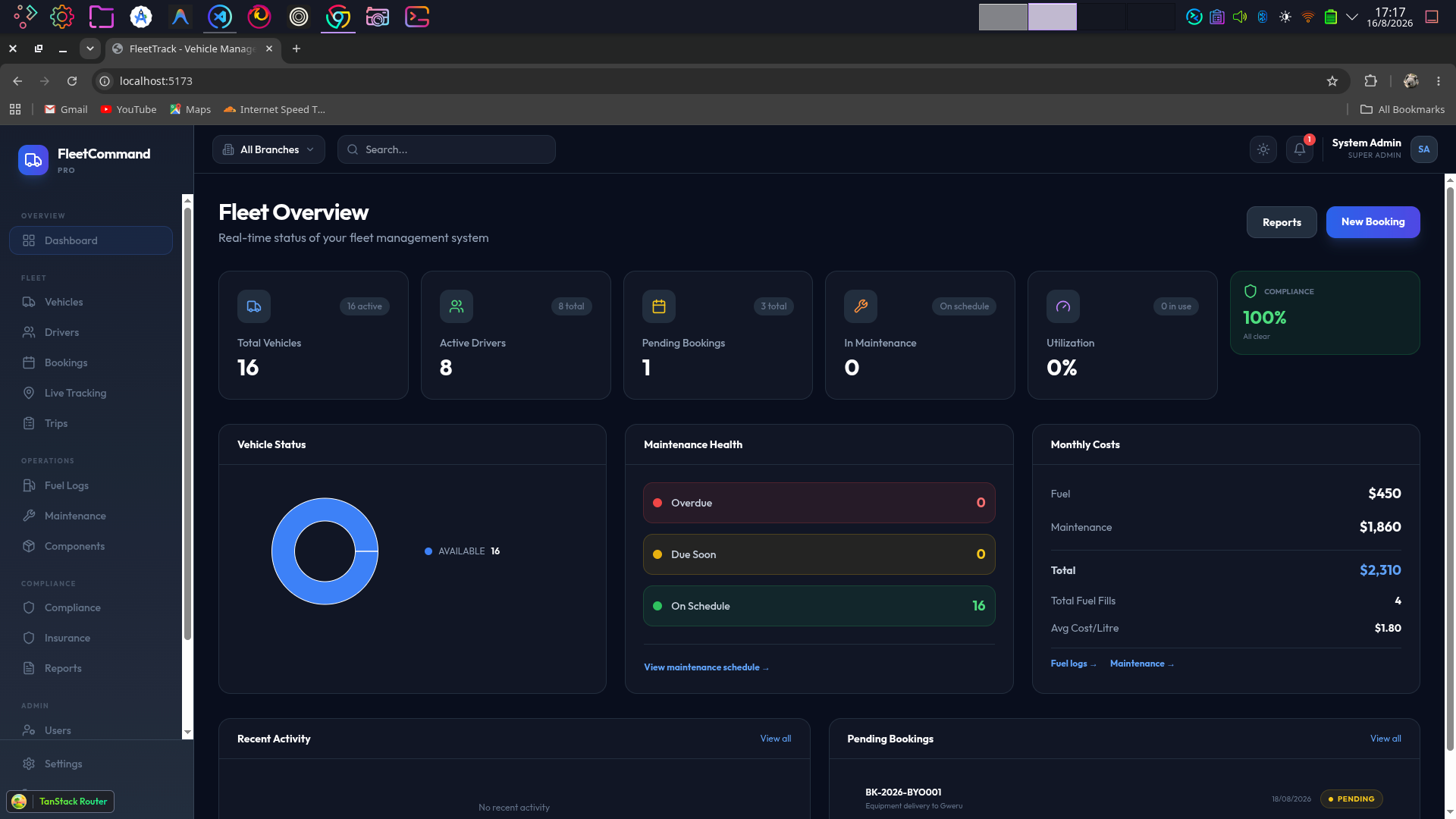
FleetTrack Vehicle Management

Aug 2026

A web application for commercial vehicle fleet tracking, route logging, and maintenance scheduling.

FleetTrack Commercial Vehicle Telematics Dashboard
// problem statement
Organizations managing transportation assets need centralized visibility into vehicle logs, service intervals, and driver assignments.
// engineering solution
Architected a modern TypeScript application providing real-time fleet dashboards, maintenance alert systems, and structured vehicle utilization reporting.
// key outcome & impact
Delivered a centralized vehicle tracking dashboard providing service interval alerts and driver activity logging.

Key Technical Highlights:

  • Centralized fleet dashboard with real-time vehicle telematics and status logs.
  • Automated maintenance scheduling alerts based on mileage and service intervals.
  • TypeScript
  • Next.js
  • Tailwind CSS
  • Node.js

~/case-studies/portfolio.md

active
Full-Stack Software

Portfolio & Infrastructure Showcase

Feb 2025 – Present

This site: a long-term career platform built with Next.js 16, TypeScript, and Cloudflare Pages with automated CI/CD.

// problem statement
Hardcoded portfolio websites go stale quickly, lack type safety, and require manual FTP/build steps that discourage regular updates.
// engineering solution
Architected a Next.js App Router application on a typed data layer with GitHub Actions automated deployment to Cloudflare Pages edge network.
// key outcome & impact
Production platform featuring strict TypeScript validation, global security headers, and automated Git-based edge deployments.

System Architecture & Data Flow

GitHub Repository ──► GitHub Actions (CI/CD) ──► Cloudflare Edge Pages ──► Global CDN (HTTPS)
 (main branch)          (lint, typecheck, build)   (Static Export / Headers)   (elic01.dev)

Key Technical Highlights:

  • Typed data architecture allowing instant updates without editing page JSX.
  • Integrated security headers (CSP, HSTS, Permissions-Policy, RFC 9116 security.txt).
  • Automated CI/CD pipeline deploying static exports to Cloudflare edge network.
  • Next.js
  • TypeScript
  • Tailwind CSS
  • Cloudflare Pages
  • GitHub Actions